The largest iron mine in the French Pyrenees
The Rancié Mines, located in the commune of Sem in the upper Vicdessos valley, constitute one of the most remarkable industrial heritages of the Pyrenees. Exploitation began in open-cast form at the summit of the Pic de Ganchette (1,596 m) and gradually developed downward through a network of galleries dug over more than two millennia. The ore — a brown and red haematite of exceptional quality, naturally enriched with manganese oxide — produced steels renowned for their resistance to corrosion. It supplied around fifty forges from the Couserans to the Pays de Sault and beyond.
A mountain republic unique in France
What makes Rancié absolutely unique in mining history is its legal status without equivalent: since time immemorial, the mine was the collective and undivided property of the valley's inhabitants — the "Universality of the People of Vic-de-Sos". This quasi-democratic organisation, comparable to that of the Andorran valleys, was governed by charters from the counts of Foix since 1272. The miners elected their own administration, and even Napoleon had to compromise with this tradition of self-management. In 1833, the mine was officially granted to the eight communes of the valley — seven today — who remain its concession holders.
Two thousand years of human and technical adventure
The first traces of exploitation date back to the 3rd century AD. The mine developed from the summit downward, digging successive galleries all connected to each other: the Auriette, Sainte-Barbe, the Pountz, the Caougne, the Bacquey. In the 19th century, the mine employed up to 400 miners and produced 7,800 tonnes of ore per year. Frequent cave-ins and competition from Lorraine ore precipitated its definitive closure in 1931. A manganese oxide unique in the world, discovered in these mines, was named after them: ranciéite.
Visiting the site today
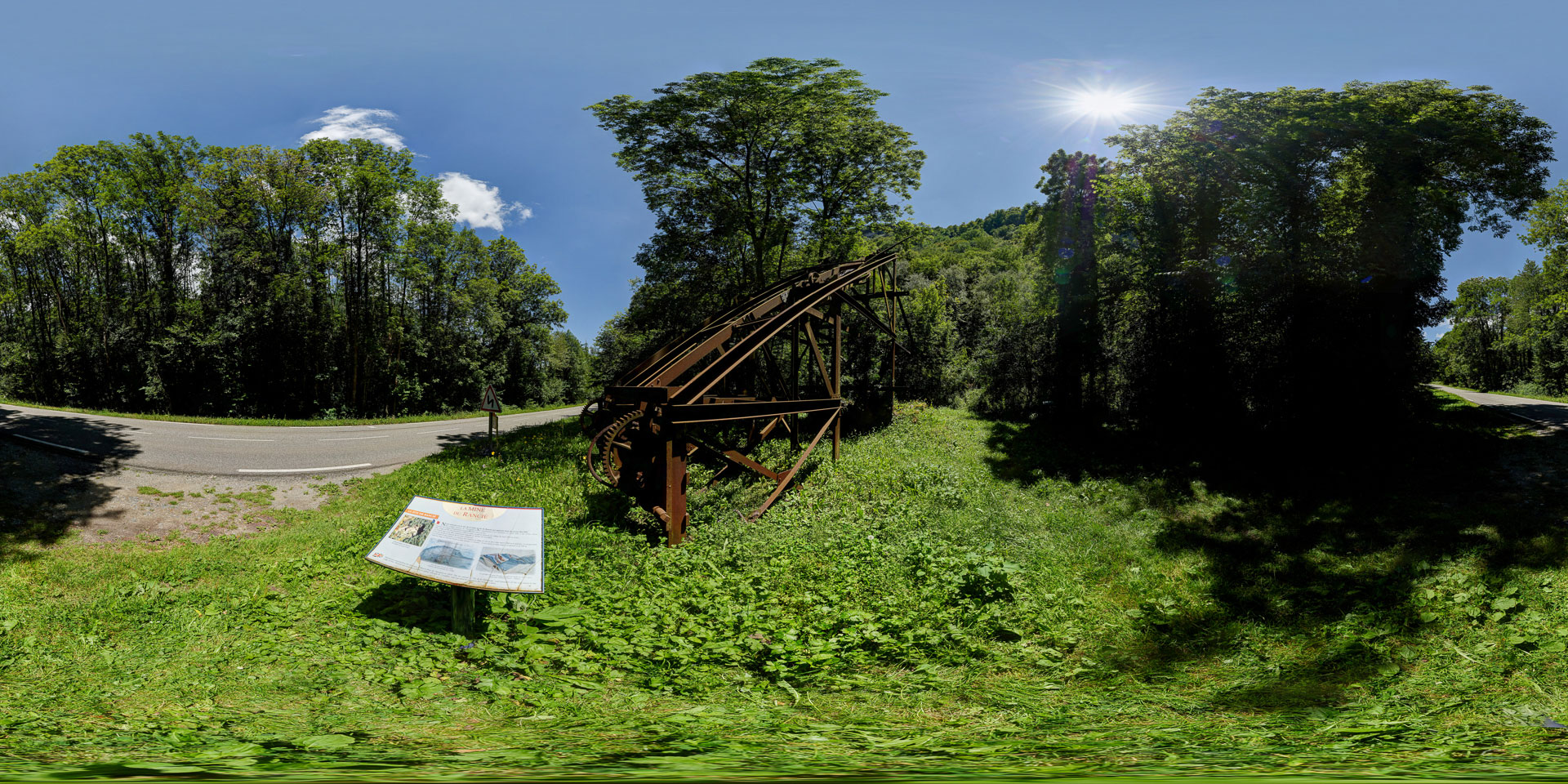
A waymarked path in yellow, dotted with educational panels, allows visitors to travel back in time along the old tips and galleries from the village of Sem. The mining museum installed in Sem's town hall and the space dedicated at the Maison des Patrimoines in Auzat (le Barri) complete the discovery. Our 360° panoramas taken in 2013–2014 document the site's surroundings, gallery entrances and the upper valley landscapes as they were at that time.