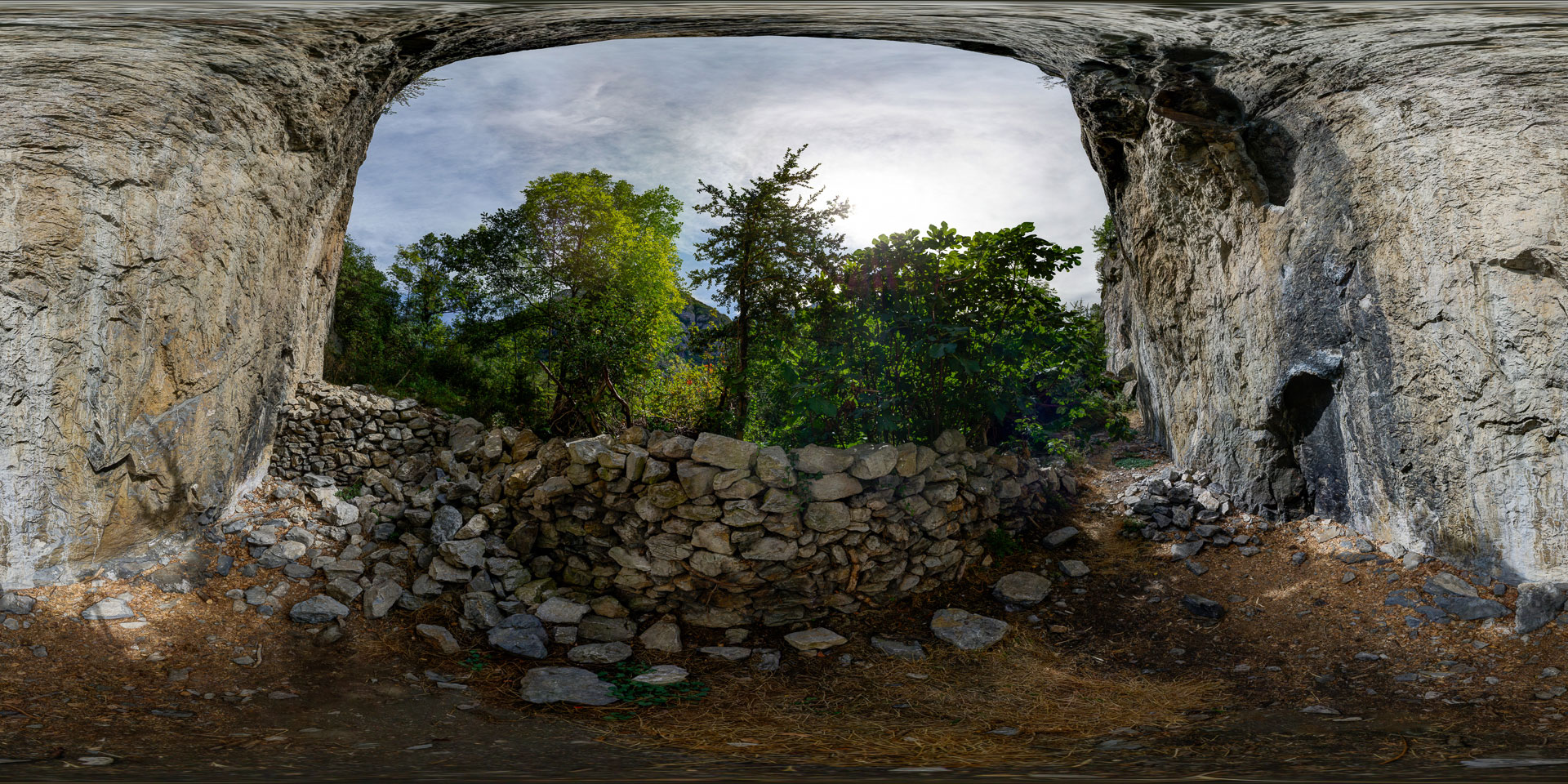
What is a spoulga?
The term "spoulga" — from the medieval Latin spelunca, meaning cave — refers in the Ariège Pyrenees to a particular type of site: a natural cavity in a limestone cliff, fitted out and fortified by medieval populations for use as a refuge or defensive stronghold. These cave-fortresses are characteristic of the Foix county's human geography in the 12th–14th centuries, in a territory where karstic limestone naturally provides such cavities.
The Spoulga d'Alliat — also known as the Caougno d'Alliat or the fortified cave of Alliat — is one of the most remarkable of these rock fortresses. Carved into the limestone cliffs dominating the village of Alliat in the Vicdessos valley, it occupied a prime tactical position: overlooking communication routes and naturally protected by the sheer cliff face.
A refuge carved from rock
Unlike built castles such as Miglos or Roquefixade, the Spoulga made use of a pre-existing natural cavity, enlarged and fitted out by human hands. Traces of medieval occupation — beam slots, hearth positions, partial masonry — attest to its regular use as a lookout post and emergency retreat for local populations during periods of conflict. During the Albigensian Crusade and the decades that followed, such refuges were vital for the communities of the upper Vicdessos.
The karstic geology as backdrop
The Spoulga d'Alliat perfectly illustrates the karstic geology of the Ariège Pyrenees. The limestone of the Génat massif — Devonian in age, some 350 to 400 million years old — has been riddled with galleries carved by the chemical dissolution of rock under the action of slightly acidic water. This same process gave birth to Niaux Cave and La Vache Cave, just a few hundred metres away in the same valley.
What you will see in our 360° panoramas
The Spoulga d'Alliat is not open to the general public due to its cliff-face position. Our 360° panoramas taken in 2013–2014 capture its immediate surroundings and allow you to appreciate its spectacular position in the Vicdessos valley landscape, facing Niaux Cave. La Vache Cave nearby, which is open to the public, ideally complements the discovery of this sector.